













History of the School
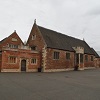
One of the things which Boston Grammar School is most valued for is its history and values based on traditions. There is a great deal of interest from the local community in the school's history. The school was given a Royal Charter in 1555 and it has stood on its current site since 1568. In the 1980s 'Floreat Bostona' was written by G.S.Bagley and published by the OBA. This book examines the history of the town of Boston and places emphasis on Boston Grammar School.
Much of the information that features on these pages is based on the work of Bagley and also from the members of the Old Boys Association who have worked tenaciously to undertake research on Boston Grammar School.
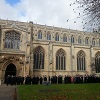
The Library
It is believed that Boston had a school in the 14th century, though Boston Grammar School, as it stands today, dates back to the sixteenth century. Indeed, there are significant links between the school and the Tudor period. Our students are aware of this due to their History lessons, but also the school's many traditions and celebrations.
Our current school owes its origins to the breach between Henry VIII and the Papacy. As Bagley argues, "Fortunately for the friaries and guilds of Boston, the town was incorporated as a free borough in 1545, which enabled Boston to preserve its school and almshouses. This was, at least, until Henry's death." On the accession of Edward VI (at the age of 9), guild lands passed to William Parr, now Lord Chamberlain and Marquess of Northampton and John Dudley who was known as the Duke of Northumberland. Northumberland was Edward's advisor and gained influence over Edward VI by posing as a Protestant, and by playing on Edward's vanity - treating the child as if he were in reality already a powerful adult king. When Edward died prematurely at the age of 15, Northumberland and Edward's Protestant supporters were worried about Edward's half sister Mary becoming queen as she was Catholic. Therefore, Northumberland came up with the cunning plan of making his Protestant daughter-in-law, Lady Jane Grey, queen. However, this did not go well with the English public who felt that legally Lady Jane Grey should not be queen and that it should go to Mary. She lasted 9 days. Mary triumphed, and seized much of the land belonging to those supporters of Lady Jane Grey. Northumberland ended up in the Tower on high treason charges. His land was forfeit to the Crown. In 1554, those lands were conveyed to the Mayor of Boston for the foundation of a grammar school in the town by Philip and Mary. In 1555 by a royal charter, Mary I announced that a school was to be built on some of this land.
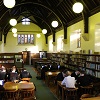
The initial school existed on Wormgate in Boston but the school only stayed in that location for twelve years. The building of a 'new' schoolhouse - now the Library around which our modern school thrives - took place between 1567 and 1568. From those small beginnings a mighty learning institution grew!
By the seventeenth century, the majority of Headmasters were Cambridge graduates, stemming particularly from Emmanuel College, where Puritanism was the order of the day. Despite a swing to Oxford graduates under the reign of the restored Charles II, Cambridge provided the majority of 'ushers' for the school. At times, the majority of BGS teachers came from Boston's surrounding villages and others much further afield, and boarding was common right up until just after World War I. There is no doubt that BGS has a fascinating history, having watched nearly five centuries of history play out around it, while retaining a central place in the social and cultural history of the town.